A valuation you can defend in court.
For the estate, the tax office, the insurer, or the sale. A qualified human appraiser signs it. We find the right specialist, vet them before you hear their name, coordinate the work, and review the report for USPAP compliance before it reaches you.
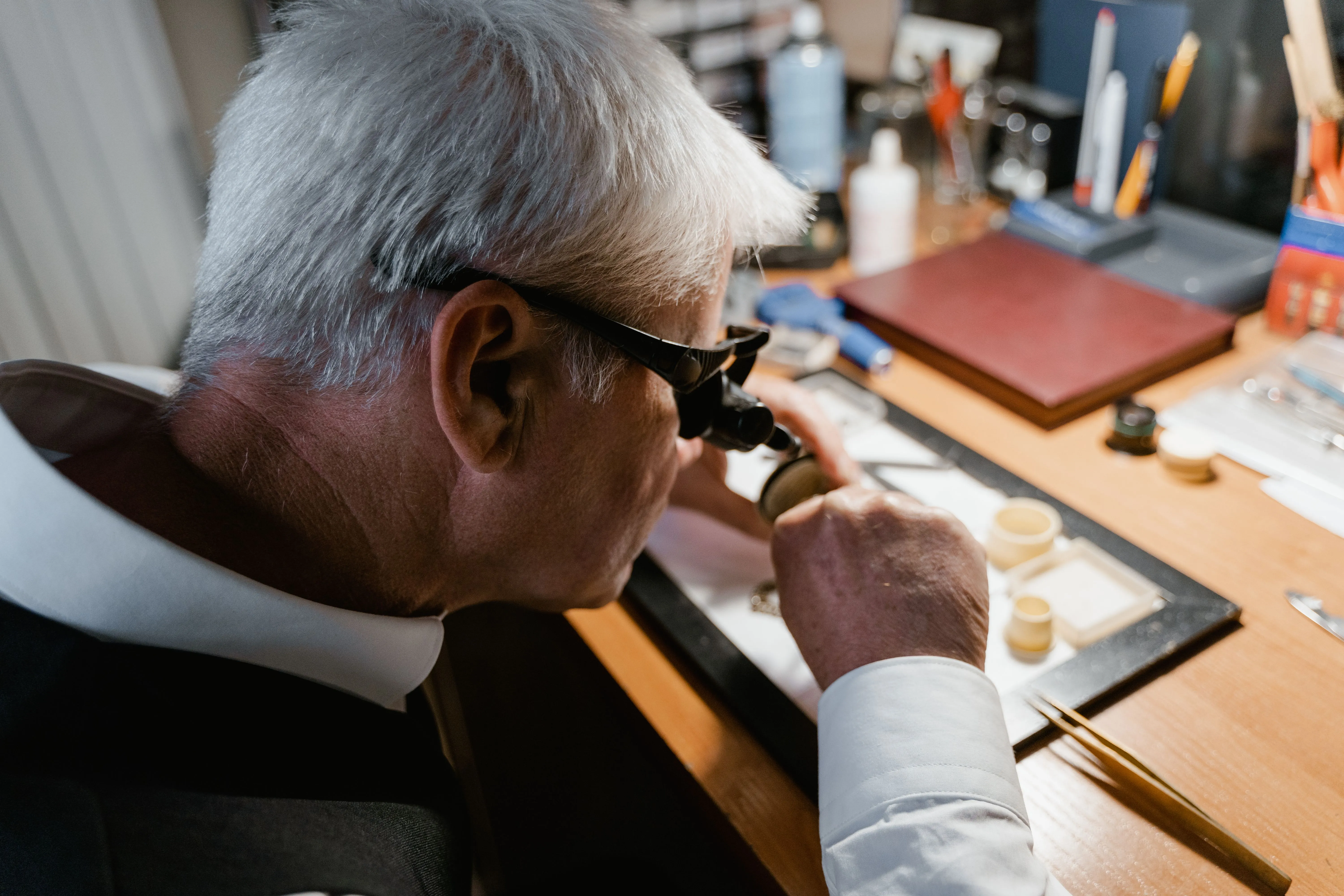
- Valuations backed by a network of over 1,400 certified appraisers across all categories
- Due diligence on every appraiser, ten points, recorded with who reviewed them and when
- Every report reviewed for USPAP compliance before it reaches you
Due diligence on every appraiser, before you ever hear their name.
A valuation is only as good as the person who signed it. So before a specialist is proposed for your matter, they have passed the same ten points of due diligence, recorded with who reviewed them and when. Specialists are never deleted, only retired, so history stays attached to the name.
Ten points of due diligence, published.
- 01Website and practice reviewed.
- 02CV on file.
- 03Credentials verified against the issuing body: AAA, ASA, ISA.
- 04Errors-and-omissions insurance verified.
- 05Conflict of interest screened.
- 06First call held.
- 07First written proposal received.
- 08References checked.
- 09First mandate completed.
- 10Quality reviewed after the mandate.
The right specialist for the piece. The coordination handled by our team.
- 01
The right specialist for the piece
A collection that spans paintings, jewellery, watches, and instruments gets a lead appraiser for each category, and still one request, one invoice, one point of contact.
- 02
The best appraiser at the best price for the job
We collect quotes, timelines, and qualifications and choose the best appraiser for the job, rarely the cheapest and rarely the most famous. You see one recommendation, and the reasons.
- 03
Coordinated end to end
We brief the specialist, set the scope and standard, coordinate the work, and review the report for USPAP compliance before it reaches you.
Every report reviewed for USPAP compliance.
USPAP, the Uniform Standards of Professional Appraisal Practice, is published by The Appraisal Foundation and recognised by courts, tax authorities, and insurers as the measure of an appraisal that holds. A report that misses it can be set aside, whoever signed it. So we review every one against the standard before it reaches you.
Read the standard at The Appraisal Foundation →What we look for in every report
- The client, the intended users, and the intended use, stated.
- The type and definition of value, and the effective date it applies to.
- The scope of work: what was inspected, what was relied on, and what was not.
- The approach to value, with the comparables and the reasoning that support the conclusion.
- Assumptions and limiting conditions, disclosed.
- A signed certification, and the qualifications of the person who signed it.
Model as trigger, appraiser as arbiter.
A valuation that holds in court has a human author. USPAP, the RICS Red Book, the International Valuation Standards, and US Treasury regulations each require the appraiser to be a person, because an appraisal is an opinion of value, and only a person can form one, explain it, testify to it, and carry liability for it. A model can do none of that, which is why we are wary of them. We know, because we tried to build one.
What a model can responsibly do is watch: estimate whether a value has probably drifted since its last appraisal and flag the object for review. The appraiser sets the value. That is the architecture we run, and the argument in our white paper.
Read the white paper in Insights →One request. We take it from there.
- 01
You tell us what the valuation is for
The object, and the purpose: estate, tax, insurance, donation, or sale.
- 02
We choose the specialist
After due diligence, for that category of object.
- 03
We brief, coordinate, chase, and review
- 04
You receive a report that holds up in court
Every step handled by our team, and logged. Days, not months.
Start with one valuation →